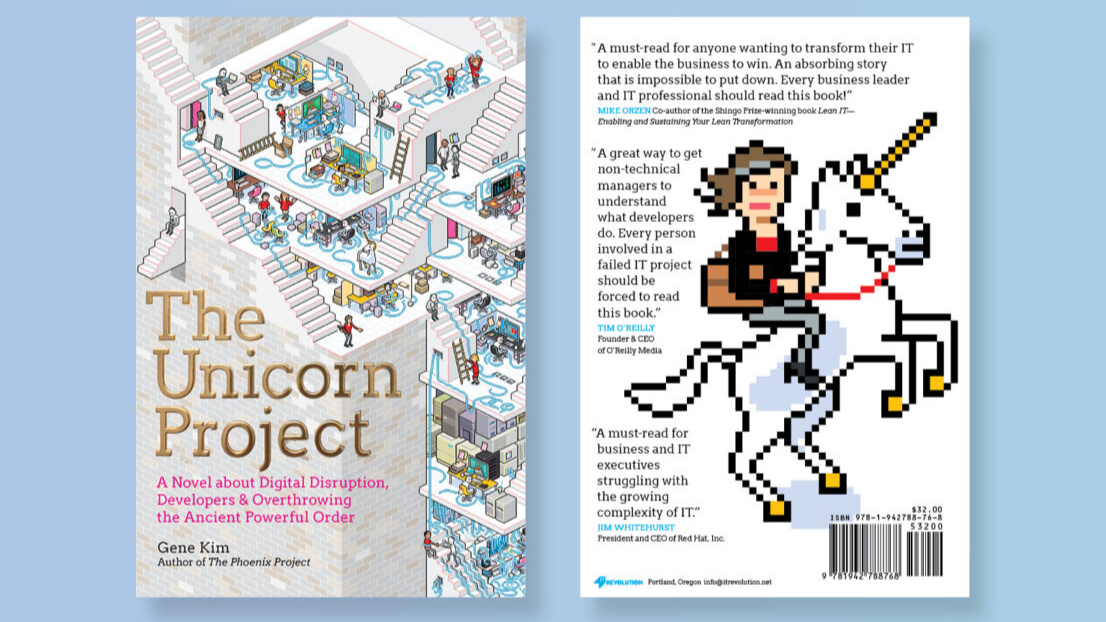
The Unicorn Project Book (Photo Credit: stauberbrandstudio)
Book Introduction
“The Unicorn Project: A Novel about Developers, Digital Disruption, and Thriving in the Age of Data” is a compelling follow-up to Gene Kim’s bestselling book, The Phoenix Project. While The Phoenix Project focused on IT operations and DevOps from an operations perspective, The Unicorn Project shifts the lens to software developers, architects, and the challenges they face in modern enterprises.
Set in the same universe as The Phoenix Project, the novel follows Maxine, a senior developer at a large enterprise, who finds herself burned out for a major failure and reassigned to a struggling project. As she navigates bureaucratic red tape, outdated processes, and cultural resistance, she joins a group of like-minded rebels determined to transform the company from within.
Through Maxine’s journey, The Unicorn Project introduces the Five Ideals - a set of guiding principles that drive high-performing software teams and digital transformations. The book explores critical themes such as developer productivity, psychological safety, and the power of data-driven decision-making.
About Author(s)
Gene Kim is an experienced IT professional, researcher, and author known for his work in DevOps and IT operations. He’s multiple award-winning CTO and the creator of the DevOps Enterprise Summit and has co-authored several influential books, including The DevOps Handbook, The Phoenix Project.
High Level Overview
The story follows Maxine, a highly skilled senior developer at a large automotive parts company called Parts Unlimited. After being unfairly blamed for a major IT failure, she is reassigned to work on a difficult and failing initiative known as The Unicorn Project. Maxine quickly discovers that the company’s software development process is broken - developers are bogged down by slow approvals, outdated technologies, long build times, and an environment resistant to change.
As she struggles with these challenges, Maxine meets a group of forward-thinking developers and engineers who are determined to fix the system from within. Together, they work to modernize software development, adopt DevOps principles, and enable a culture of innovation.
Through Maxine’s journey, The Unicorn Project highlights the everyday frustrations of software developers in traditional enterprises - long deployment cycles, lack of autonomy, and resistance to modern DevOps practices. The book demonstrates how organizations can overcome these challenges by embracing agile development, continuous delivery, and a culture of trust and experimentation.
Key Takeaways
- Developers Need Autonomy and Fast Feedback Loops
- Developers should be able to work independently without being blocked by slow processes, approvals, or dependencies.
- Fast feedback loops help teams identify issues early, reduce rework, and improve efficiency.
- The Five Ideals Drive High-Performing Teams
- Locality and Simplicity: Keep systems and processes simple to improve developer productivity.
- Focus, Flow, and Joy: Eliminate unnecessary friction so developers can focus on meaningful work.
- Improvement of Daily Work: Invest in fixing broken processes and removing inefficiencies.
- Psychological Safety: Encourage a culture where people feel safe to experiment and make mistakes.
- Customer Focus: Ensure that work delivers real value to customers rather than just meeting internal goals.
- Technical Debt Slows Down Innovation
- Outdated tools, inefficient processes, and poor system design create bottlenecks that prevent teams from delivering quickly.
- Investing in modernization and refactoring improves long-term productivity and business agility.
- Cross-Functional Collaboration is Key
- Silos between teams (developers, operations, security, and business) create delays and misalignment.
- Cross-functional teams working together can drive faster innovation and better decision-making.
- Data is a Competitive Advantage
- Organizations that leverage real-time data for decision-making can adapt quickly and stay ahead of competitors.
- Data-driven companies move faster and make better strategic choices.
- Organizations Must Embrace a Culture of Learning and Experimentation
- Companies should encourage employees to experiment, learn from failures, and continuously improve.
- Leaders should empower teams rather than micromanage them.
- DevOps and Agile Practices are Essential for Success
- Continuous integration, continuous delivery (CI/CD), and automation improve software quality and speed.
- Agile principles help teams stay adaptable and focused on delivering value.
- Leadership Plays a Critical Role in Transformation
- Change must be driven from the top, but it also requires grassroots efforts from passionate individuals.
- Leaders should create an environment where innovation thrives and employees feel valued.
- Prioritize Core first then Context
- Core is something that relates to Customer + developer experience and business, that’s why value this first.
- Context is the other things of a organization that should think about second.
- Innovation is the Key for Growth
- To generate more money and ensure business growth Innovation is the key.
Lastly remember, small can’t overcome big but fast always overcome slow. So fast and big always win the race.
Conclusion
The Unicorn Project is not just a novel, it’s a roadmap for how modern software teams and organizations can overcome challenges, adopt DevOps principles, and build a culture of continuous improvement. The key message is that:
- Empowering developers / engineers,
- Reducing friction,
- Fostering collaboration,
- Which leads to better business outcomes and happier teams.