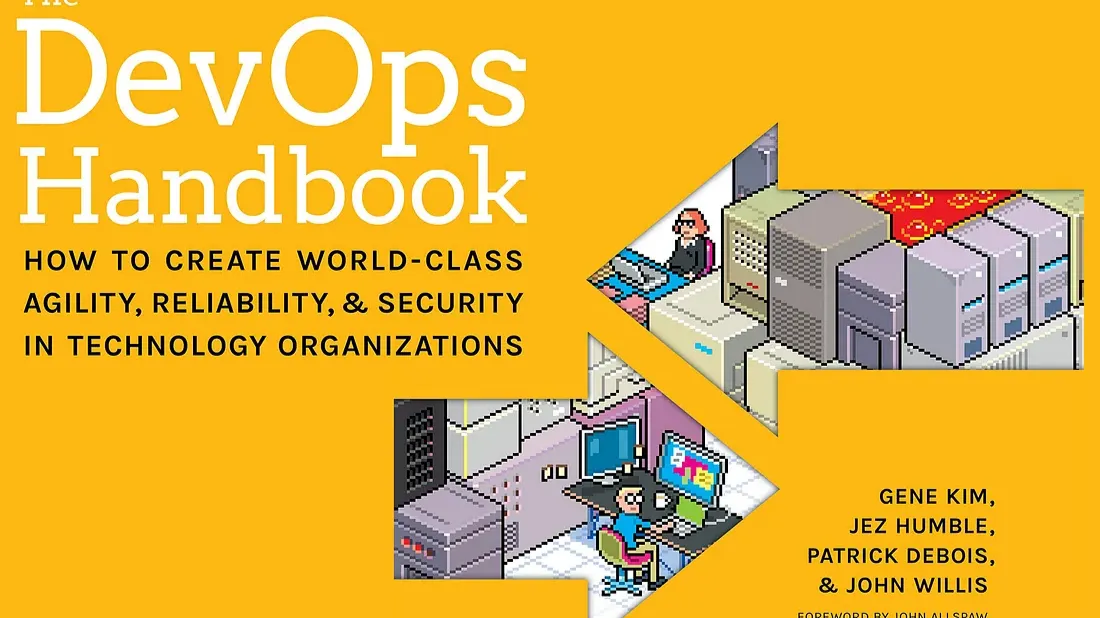
DevOps Handbook Book (Photo Credit: Google)
Book Introduction
“DevOps Handbook: How To Create World-Class Agility, Reliability, & Security In Technology Organizations” by Gene Kim, Jez Humble, Patrick Debois, and John Willis, is a practical roadmap for building high performing IT organizations. Published originally in October 2016 (with a fully revised second edition released on November 30, 2021), it is a practical guide for implementing DevOps practices across organizations of all sizes and industries. Serving as a follow-up of the famous book ‘The Phoenix Project’ and there described famous loop called the 3 ways: Flow, Feedback and Continuous Learning.
About Author(s)
Gene Kim, a former CTO and researcher, and a leading voice in DevOps and IT transformation. He co-authored The Phoenix Project, The Unicorn Project and founded IT Revolution, a company that promotes DevOps best practices. He focuses on how high-performing IT organizations succeed.
Jez Humble, is a DevOps pioneer and co-author of Continuous Delivery and Accelerate. He is a professor at UC Berkeley and works to improve software delivery performance in organizations. He specializes in CI/CD and lean software development.
Patrick Debois, often called the “Father of DevOps,” Patrick coined the term “DevOps” and helped launch the global DevOps movement. He has a background in agile, systems administration, and development, and promotes collaboration across IT roles.
John Willis, well known in IT and DevOps, and has over 30 years of experience in operations and infrastructure. He’s known for his work on DevSecOps (security + DevOps) and helped grow the DevOpsDays community. He brings deep operational expertise to the book.
High Level Overview
This book focuses on how to improve software delivery speed, reliability, and security by combining development, operations, and security teams through shared goals, automation, and continuous improvement. This book organize in a way to help organizations transform their IT practices using DevOps principles so they can deliver better software faster, more reliably, and more securely.
Core Structure (Six Parts):
- The Three Ways (flow, feedback, continuous learning): Introduces the foundational DevOps principles.
- Where to Start: Guides on identifying value streams, picking projects, and organizational change.
- Technical Practices: Covers modern DevOps practices (CI/CD, IaC, TDD, automated testing and deployment).
- Architecting for Low Risk Releases: Teaches how to release safely using different techniques (feature flags, blue/green deployment, canary release).
- Security & Compliance: Integrates InfoSec and audit into DevOps workflows.
- Management & Culture: Offers leadership insights and strategies to create a DevOps-friendly culture.
And all the principles and practices describe in this book also validate with real world case studies and examples from the organization like: Netflix, Etsy, Google, Target, US Navy etc.
Key Takeaways
The Three Ways – Core DevOps Principles
- Flow: Accelerate the movement of work from development to operations.
- Feedback: Create fast, continuous feedback loops at every stage.
- Continuous Learning: Encourage experimentation, learning from failure, and improvement.
Embrace Continuous Integration & Continuous Delivery (CI/CD)
- Automate builds, tests, and deployments.
- Enable safe, fast, and frequent releases.
- Ensure every commit is potentially deployable.
Use Infrastructure as Code (IaC)
- Manage infrastructure through code (e.g., Terraform, Ansible).
- Make infrastructure version-controlled, testable, and repeatable.
- Eliminate manual configuration errors.
Automate Everything
- Automate: (build, test, deploy, monitoring, security and compliance).
- Improves reliability and reduces human error.
Improve Deployment Safety
- Use deployment strategies like: (feature flags, blue/green deployment, canary release)
- Roll out changes gradually and reduce risk.
Shift Security and Compliance Left (DevSecOps)
- Integrate security into the development lifecycle early.
- Automate security scans and policy enforcement.
- Make InfoSec a shared responsibility.
Measure Performance Using Four Key Metrics
- Deployment Frequency
- Lead Time for Changes
- Change Failure Rate
- Mean Time to Recovery (MTTR)
- Use these to track and improve DevOps maturity.
Break Down Organizational Silos
- Encourage collaboration between Dev, Ops, QA, and Security.
- Promote shared goals and responsibilities.
- Use cross-functional teams and ChatOps for communication.
Use Value Stream Mapping
- Visualize the end-to-end delivery pipeline.
- Identify bottlenecks, delays, and waste.
- Optimize each step to improve flow and efficiency.
Foster a Culture of Continuous Learning
- Encourage safe-to-fail experiments.
- Conduct blameless postmortems.
- Celebrate learning from both success and failure.
Leadership Support is Essential
- DevOps requires buy-in and empowerment from leadership.
- Move from command-and-control to autonomy and trust.
- Align incentives around customer value and team outcomes.
Build for Resilience, Not Just Uptime
- Design systems to recover quickly from failure.
- Use chaos engineering, monitoring, and self-healing patterns.
- Focus on user experience, not just system health.
Apply Lean and Agile Thinking
- Deliver in small batches.
- Eliminate waste and inefficiencies.
- Focus on delivering customer value continuously.
Tools Matter, but Culture is Key
- Tools enable DevOps practices.
- But true transformation happens through changes in mindset, habits, and collaboration.
Conclusion
The DevOps Handbook is a practical guide for transforming how organizations build, deliver, and operate software. It shows how to apply DevOps principles—flow, feedback, and continuous learning—to achieve faster deployments, higher quality, and better team collaboration.
By embracing practices like CI/CD, Infrastructure as Code, automated testing, and collaborative culture, teams can break down silos, reduce risk, and deliver customer value rapidly and reliably.
Ultimately, DevOps is not just about tools—it’s a cultural shift that enables innovation, resilience, and continuous improvement across the entire software lifecycle.