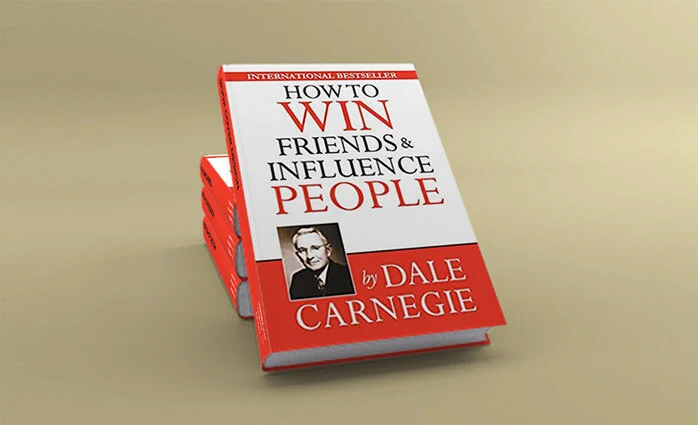
How to Win Friends and Influence People Book (Photo Credit: uniathena)
Book Introduction
“How to Win Friends and Influence People” by Dale Carnegie is a timeless self-help classic that teaches practical techniques for improving communication, building relationships, and influencing others positively—both in personal and professional life. Instead of theory, it focuses on human psychology and real-life social behavior.
About Author(s)
Dale Carnegie (1888–1955) was an American writer, lecturer, and developer of self-improvement courses. He was a pioneer in personal development & communication skills and was focused on public speaking, salesmanship, and interpersonal skills. He founded Dale Carnegie Training, still active globally. His teachings are based on practical observation of human behavior, not only academic theory. He also wrote How to Stop Worrying and Start Living (1948).
High Level Overview
The book is divided into core principles grouped into sections, each targeting a specific social skill:
Part 1: Fundamental Techniques in Handling People
- Don’t criticize, condemn, or complain
- Give honest and sincere appreciation
- Arouse in others an eager want
Part 2: Six Ways to Make People Like You
- Become genuinely interested in others
- Smile
- Remember names
- Be a good listener
- Talk in terms of others’ interests
- Make others feel important
Part 3: How to Win People to Your Way of Thinking
- Avoid arguments
- Show respect for others’ opinions
- Admit when you’re wrong
- Begin in a friendly way
- Let others feel the idea is theirs
- Try honestly to see things from the other person’s point of view
- Be sympathetic with the other person’s ideas and desires
- Appeal to the nobler motives and dramatize your ideas
Part 4: Be a Leader (Influence Without Offending)
- Praise improvements and give honest appreciation
- Give indirect criticism
- Ask questions instead of giving orders
- Let others save face
- Inspire enthusiasm
- Let other learn from the mistakes
- Make others happy to do something you have asked of them
Key Takeaways
1. Never Criticize, Condemn or Complain - Understand Instead
Criticism triggers defensiveness. People justify their behavior instead of improving.
Replace criticism with:
- Curiosity
- Empathy
- Constructive feedback
2. Appreciation Is a Powerful Motivator
People crave recognition. Honest appreciation builds trust and loyalty.
Important:
- Must be genuine, not flattery
- Focus on specific actions, not vague praise
3. Influence = Aligning with Others’ Interests
You can’t force people — you must make them want to do something.
Ask:
- “What does this person want?”
- “How can I connect my goal to their desire?”
- “How can I arouse in the other person an eager want?”
4. People Love Talking About Themselves
Listening is more powerful than speaking.
Practice:
- Active listening
- Ask open-ended questions
- Let others feel heard
- Show genuine intertest in other people
- Smile
5. Names Matter More Than You Think
A person’s name is emotionally significant.
Remembering and using names:
- Builds instant rapport
- Shows respect and attention
6. Avoid Arguments—They Always Backfire
Winning an argument often means losing a relationship.
Better approach:
- Respect differences
- Seek understanding, not victory
7. Admit Mistakes Quickly
Owning mistakes builds credibility and disarms criticism.
Counterintuitive truth:
- Admitting faults increases respect
8. Make Others Feel Important (Sincerely)
This is one of the core principles of human behavior.
People respond positively when:
- Their value is recognized
- Their ego is respected
9. Lead Through Encouragement, Not Authority
People resist control but respond to encouragement.
Effective leadership:
- Praise progress
- Suggest instead of command
- Build confidence
10. Change Behavior Without Offending
Direct criticism damages relationships.
Instead:
- Start with praise
- Give feedback indirectly
- Offer hope and encouragement
Conclusion
“How to Win Friends and Influence People” is fundamentally about emotional intelligence and human-centered communication. Its principles are simple but powerful:
Treat people with respect, understand their perspective, and make them feel valued.
Mastering these ideas can significantly improve your:
- Leadership skills
- Career growth
- Personal relationships