Detailed Software Engineering Series:
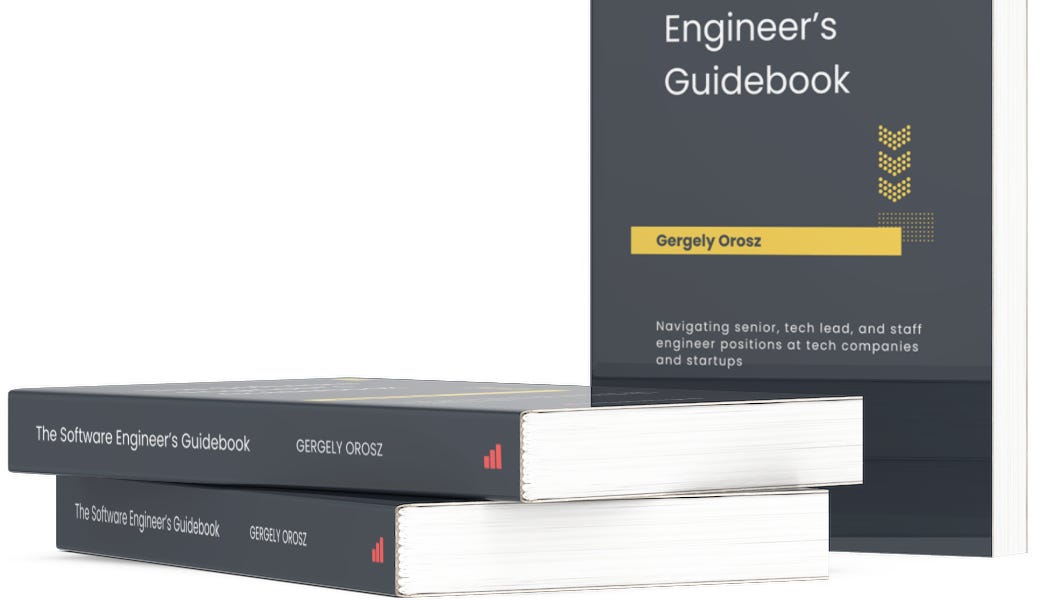
The Software Engineer’s Guidebook (Photo Credit: The Pragmatic Engineer)
Book introduction
“The Software Engineer’s Guidebook” positions itself as a comprehensive career-guide for software engineers. As the author puts it: this is “the book I wish I could have read early in my career.”
The book walks readers through what it takes to grow as a software engineer — not only technically, but professionally — from a junior developer all the way up to staff/principal or senior engineering levels. Through its structure, it attempts to capture what skills, mindset, and responsibilities evolve across a “typical” engineering career path.
In short: it’s meant to be a “guidebook” for engineers — especially those early to mid-career — who want clarity on how to progress, what to learn, and how to think about engineering roles beyond coding alone.
About Author
Gergely Orosz is known in the tech world for his writing (notably the popular newsletter The Pragmatic Engineer) and his experience as a software engineer and engineering manager. He conceived this book because, early on in his career, he had felt the absence of structured guidance — especially upon entering a larger tech company, where expectations changed but mentorship was scarce.
After dealing with the frustration of being passed over for promotion without clear feedback, he resolved that once he became a manager, he would provide to others the kind of mentorship and clarity he wished he’d had. The book distills a lot of that accumulated experience and advice.
Interestingly, when he tried to get the book published via traditional tech-book publishers, he faced rejections — so he ultimately self-published it.
High-level Overview
The structure of the book is deliberately aligned with a typical career arc. It is divided into six major parts:
- Part 1: Developer Career Fundamentals — applicable to everyone, regardless of level.
- Part 2: The Competent Software Developer — focuses on expectations for early-career developers.
- Part 3: The Well-Rounded Senior Engineer — covers what it takes to be a reliable, effective senior engineer beyond just coding.
- Part 4: The Pragmatic Tech Lead — guidance for those transitioning to leadership or team-lead roles.
- Part 5: Role Model Staff and Principal Engineers — targeting the highest individual-contributor roles, offering perspective on making organizational-level impact.
- Part 6: Conclusion — reflections and general advice, applicable across levels.
Content spans both “hard” technical topics — like software architecture, reliability, system design — and “soft” / professional matters — like collaboration, communication, leadership, career planning, and understanding what different companies expect.
Insights and Learning
- Career growth is multi-dimensional — technical skills, communication, ownership, leadership, and collaboration all matter.
- Every engineer level has different expectations — junior builds skills, mid-level executes independently, senior owns outcomes, staff/principal influences org-wide.
- Strong engineers think in systems, not tasks — looking at scalability, reliability, risks, and long-term impact.
- Ownership is key — taking responsibility from problem discovery to solution delivery builds trust.
- Communication becomes more important as you grow — writing clearly, explaining ideas, documenting decisions.
- Collaboration is part of the job — mentoring, reviewing code, aligning with product, and helping teammates succeed.
- Understanding business and customer context leads to better technical decisions.
- Senior engineers focus on reducing uncertainty and risks — clarifying requirements, identifying unknowns, planning ahead.
- Leadership is about influence, not job titles — guiding others, shaping direction, and setting standards.
- Career growth requires intentional effort — seeking feedback, choosing strategic projects, tracking impact.
- Engineers grow both in depth and breadth — mastering tools while learning architecture, operations, and reliability.
- Reliability and quality are fundamental — monitoring, testing, tech debt reduction, and resilience are core responsibilities.
Conclusion
“The Software Engineer’s Guidebook” is a valuable career-navigation tool — especially for developers who feel lost in “just coding,” or early/mid-career engineers thinking about future growth. Its strength lies in giving structure, perspective, and a holistic view of what modern software engineering careers can look like.
However — it’s not a deep technical manual, and doesn’t replace books that focus intensively on architecture, algorithms, leadership frameworks, or team dynamics. If you’re already a senior or staff engineer with years of experience, much of the content may feel familiar.
Great for those at or before senior level seeking guidance on what lies ahead. It sets realistic expectations, helps build strategic thinking around career progression, and can act as a foundational “career map.” But as you grow, you’ll likely need more specialized, deep-dive resources to sharpen specific skills.